


The device is removed once it has served its purpose. TADs are different from dental implants. Implants serve not only as anchor devices but also as dental prostheses.
TADs have been in use for over 35 years, but only in the last decade have they become a more common orthodontic treatment option. A survey from 2008 concluded that the primary reason TADs are not being utilised as often in modern orthodontics was that orthodontists do not receive proper education and training in the use of TADs during their residency programmes.
By 2011, more than 80% of these programmes had begun, including more formal training concerning TADs. Today, more dental professionals are educated about TADs, which have become integral to dental treatment.
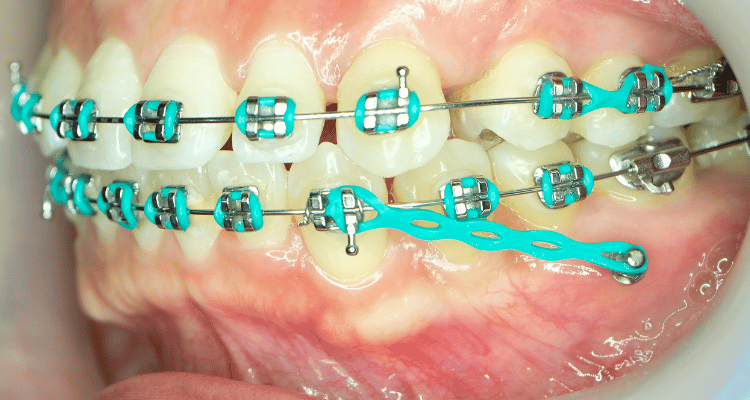
Isaac Newton’s Third Law of Motion states that for every action, there is an equal reaction. When a person undergoes orthodontic treatment, the laws of physics must be considered.
The goal of orthodontics is to move teeth into the correct position. To achieve this, force must be applied to two interacting objects — the teeth themselves and the anchorage, which provides resistance and pulls the teeth into place.
Dental professionals find that traditional anchorage methods aren’t always reliable, tending to move about in the mouth after the force is applied for a prolonged period. This can allow the teeth to move differently than anticipated.
TADs, which are routinely replaced, help to ensure that Newton’s Third Law works to the benefit of your smile, encouraging teeth to move with fewer deviations.
BOOK THIS TREATMENT
 BACK TO Orthodontics


“They have a very nice and friendly staff. The place is modern and clean. I went for a check-up, and the doctor explained everything I…”

“My sincere thanks to Dr Pedro Arteche, who did a wonderful job. When he started working with my teeth, I immediately felt his professionalism. He…”
“Lovely people, and the staff have helped me tremendously. Any questions I have are always answered with great detail, and they're calming and reassuring when…”
“I had a great experience at Alma Smiles with their highly professional staff a very friendly environment. I highly recommend this place. It is clean,…”
“Welcoming staff and pleasant experience. I have been coming to Alma Smiles for years now, and I find it convenient and positive. My teeth have…”
“I would highly recommend Alma Smiles. I had an excellent experience since day one. I have had my orthodontic treatment and am very happy with…”
“I have always found all staff very polite, helpful and very professional. They are very good at giving me the best advice and encouragement and…”
“Great staff, kind and professional. The architecture of the building is very cosy and comfortable. I booked my appointment within minutes, and it took minutes.…”
“Incredible! The best dentist I’ve been to. The staff were so friendly, and the manager was so welcoming and really reassured me when I kept…”
“Doctor Krisztina, Jessie, Alex, Ayah and Joe have all been fantastic, very friendly and patient. While having my root canal, I could not have felt…”
“Alma Smiles - has been my surgery for some time now. I admit I don't like going to the dentist's, but the service provided by…”
“It was an outstanding experience from start to finish! Both my 3-year-old son and I received exceptional care. Pedro and his staff were incredibly patient…”
“I highly recommend Alma Smiles! I had a direct composite and a mouth guard after my tooth canal treatment, and I’m very happy with the…”
“My recent experience at Alma Smiles exceeded my expectations in every way. The staff was friendly and knowledgeable; the facility was modern and clean, and…”
“It is really a top surgery. I even travelled 45 minutes away to get here, even though I had local ones. It's really modern and…”